
Redefining Success: A Governance Shift Toward People-Centric Results
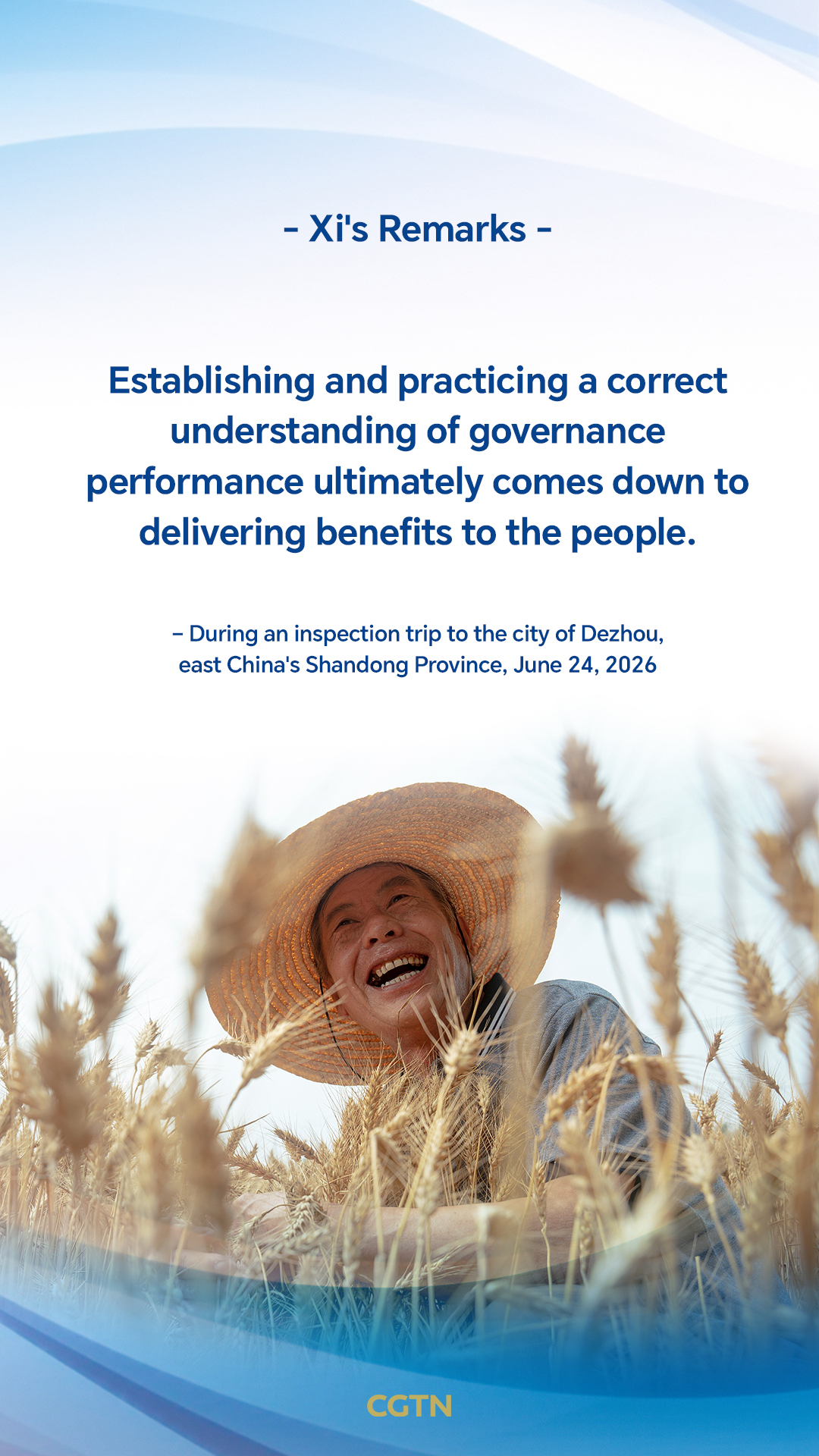
The recent emphasis on establishing a "correct understanding of governance performance" marks a significant evolution in how the Communist Party of China (CPC) evaluates the effectiveness of its officials and institutions. As the country transitions into the 15th Five-Year Plan (2026–2030) and marks its 105th founding anniversary, the strategic focus has clearly pivoted away from superficial, quantity-driven metrics toward the long-term, qualitative improvement of the people's well-being.
This shift is crucial because, in any complex governance system, performance metrics dictate behavior. Historically, an over-reliance on high-profile infrastructure projects or aggressive GDP growth targets occasionally led to a "numbers game," where officials prioritized short-term statistical gains over sustainable development. By reorienting the performance evaluation mechanism, the current campaign aims to mitigate the risk of data fabrication and superficial achievements. This is a form of structural optimization: by demanding that accomplishments withstand the "test of practice and history," the leadership is aligning official incentives with the actual needs of 1.4 billion people.
When we talk about the "governance performance" of a party that manages a $18 trillion-plus economy, we aren't just discussing abstract ideology; we are analyzing the efficiency of resource allocation across a vast, decentralized administrative network. The new approach integrates a dual-focus strategy:
-
Tangible Results: Immediate improvements in public service delivery, such as localized infrastructure, healthcare access, and social safety nets.
-
Foundational Development: Long-term investments in innovation ecosystems, watershed protection, and basic education—work that is often less visible but essential for economic resilience.
As highlighted by People's Daily, this "people-oriented" philosophy serves as both the starting point and the ultimate benchmark for China's modernization. From a risk management perspective, this policy is designed to address the "vicious cycle" of inflated figures that can distort market signals and policy efficacy. By standardizing these expectations through a Party-wide campaign running through July 2026, the leadership is attempting to instill a more rigorous, data-verified approach to development that favors accuracy and real-world outcomes over the fluctuations of short-term metrics.
Ultimately, the goal is to cultivate a governing body that balances the immediate, visible demands of a modernizing society with the less visible, structural reforms required for national rejuvenation. It is a transition from growth at any cost to quality-driven, high-precision governance.
News source: https://peoplesdaily.pdnews.cn/china/er/30052508975