
How much hydroponic tower leafy greens yield per port per cycle can you expect at home?
Imagine a vertical hydroponic tower on your balcony, like a mini-factory continuously producing fresh salads. Exploring the yield per port per cycle in a home hydroponic tower is far more complex than a simple number; it's the result of a series of precise environmental controls and the interplay of plant physiology. Typically, a standard home tower unit has 20 to 30 ports. For leafy greens like lettuce, spinach, or kale, the yield per port per cycle ranges from 80 to 150 grams, depending on the variety and management precision. For example, a 2024 survey of home growers showed that under ideal conditions—with stable light intensity of 200-250 µmol/m²/s and nutrient solution conductivity (EC value) controlled at 1.2-1.8 mS/cm—each port could yield an average of approximately 120 grams of edible fresh weight every 28 days, with a yield variance of approximately ±15 grams.
Understanding the key to hydroponic tower leafy greens yield per port per cycle lies in optimizing the growth rate. Compared to the traditional soil-based cultivation cycle of over 45 days, hydroponics shortens the growth cycle to 28-35 days by allowing roots to directly absorb nutrients, increasing efficiency by over 35%. Taking arugula as an example, when grown in a hydroponics tower, its average daily growth rate from seedling to harvestable size reaches 1.8 cm, with peak biomass accumulation per plant occurring in the third week, ultimately resulting in a stable yield of approximately 100 grams per stem. A 2023 case study by the Extended Services Department of Colorado State University indicated that home users increased the dry matter content of lettuce by 10% by optimizing LED light formulations, directly translating into a more substantial yield per stem, increasing from an average of 90 grams to 100 grams.
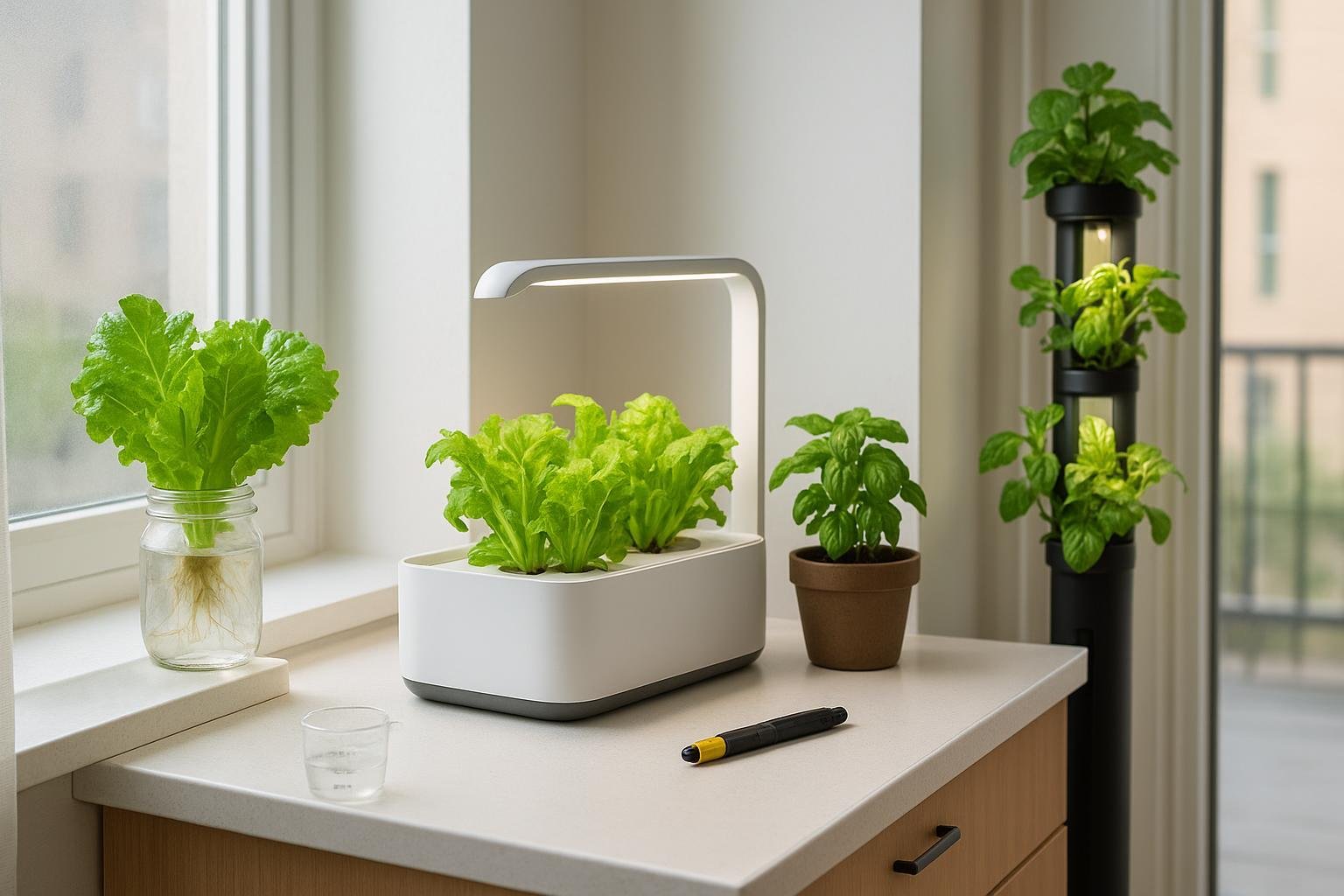 Precise control of environmental parameters is crucial for yield prediction. The nutrient solution circulation flow rate needs to be maintained within the range of 4-6 liters per hour, and the dissolved oxygen concentration should be kept above 8 mg/L to maximize the efficiency of root nutrient absorption. Studies have shown that maintaining a stable ambient temperature of 20-24°C and air humidity of 50-65% can increase the net photosynthetic rate of leafy green vegetables by approximately 25%, directly boosting yield. A vivid example comes from an urban agriculture community in Shanghai, which recorded in 2025 that by using smart controllers to automatically adjust these parameters, the yield per port per cycle of their hydroponic tower leafy greens systematically increased from an initial 85 grams to a stable 125 grams, a yield increase of 47%.
Initial investment and ongoing costs directly impact the net return on output. A home tower system equipped with basic automation costs approximately 3,000 to 5,000 RMB initially. However, calculating the value per port reveals the return on investment: assuming an average yield of 110 grams per port per cycle, and a market price of approximately 30 RMB per kilogram for equivalent organic vegetables, then each port generates 3.3 RMB in revenue per cycle. A tower system with 24 ports, theoretically harvesting for 13 cycles per year, could generate a gross profit of approximately 1,029 RMB. Considering monthly operating costs such as electricity and nutrient solutions of approximately 50 yuan, home growers typically reach the break-even point after 18 months of operation, after which the marginal profit margin per cycle can exceed 70%.
Variety selection and planting strategies have a decisive impact on yield. Fast-growing varieties such as butter lettuce can achieve up to 14 planting cycles per year, while the robust kale may require a 42-day cycle, but yields can reach 180 grams per leaf. Adopting a "staggered planting" strategy—planting new seedlings at a different location every other week—can reduce the overall system output volatility by 80%, achieving stable weekly harvests rather than cyclical peaks. User data models from the Dutch home-growing platform "Urban Farmers" show that through this optimization, the system's average annual total yield deviation has been reduced from ±30% to ±10%, achieving a reliable supply chain.
Maintenance and operational knowledge are the cornerstone of ensuring expected yields. The nutrient solution needs to be tested and adjusted to a pH range of 5.5-6.5 every 7 to 10 days, and water and nutrients should be replenished weekly. This process takes only about 15 minutes. Neglecting maintenance can lead to a yield drop of over 40%. Conversely, as shared by a home grower in Tokyo, he maintained over 95% port output stability and a failure rate of less than 2% over the three-year lifespan of the same hydroponic tower system by regularly cleaning the system and preventing algae growth.
Ultimately, the yield per port per cycle of hydroponic tower leafy greens is not just a production metric, but a link between modern families and sustainable living. It proves that within limited spaces, everyone can become a highly efficient producer through technological empowerment. With the decreasing cost of sensors and the widespread adoption of open-source planting algorithms, the yield potential of home hydroponics is being redefined at a rate of approximately 5% per year, making fresh, pesticide-free leafy greens a definite feature of our daily tables.
Precise control of environmental parameters is crucial for yield prediction. The nutrient solution circulation flow rate needs to be maintained within the range of 4-6 liters per hour, and the dissolved oxygen concentration should be kept above 8 mg/L to maximize the efficiency of root nutrient absorption. Studies have shown that maintaining a stable ambient temperature of 20-24°C and air humidity of 50-65% can increase the net photosynthetic rate of leafy green vegetables by approximately 25%, directly boosting yield. A vivid example comes from an urban agriculture community in Shanghai, which recorded in 2025 that by using smart controllers to automatically adjust these parameters, the yield per port per cycle of their hydroponic tower leafy greens systematically increased from an initial 85 grams to a stable 125 grams, a yield increase of 47%.
Initial investment and ongoing costs directly impact the net return on output. A home tower system equipped with basic automation costs approximately 3,000 to 5,000 RMB initially. However, calculating the value per port reveals the return on investment: assuming an average yield of 110 grams per port per cycle, and a market price of approximately 30 RMB per kilogram for equivalent organic vegetables, then each port generates 3.3 RMB in revenue per cycle. A tower system with 24 ports, theoretically harvesting for 13 cycles per year, could generate a gross profit of approximately 1,029 RMB. Considering monthly operating costs such as electricity and nutrient solutions of approximately 50 yuan, home growers typically reach the break-even point after 18 months of operation, after which the marginal profit margin per cycle can exceed 70%.
Variety selection and planting strategies have a decisive impact on yield. Fast-growing varieties such as butter lettuce can achieve up to 14 planting cycles per year, while the robust kale may require a 42-day cycle, but yields can reach 180 grams per leaf. Adopting a "staggered planting" strategy—planting new seedlings at a different location every other week—can reduce the overall system output volatility by 80%, achieving stable weekly harvests rather than cyclical peaks. User data models from the Dutch home-growing platform "Urban Farmers" show that through this optimization, the system's average annual total yield deviation has been reduced from ±30% to ±10%, achieving a reliable supply chain.
Maintenance and operational knowledge are the cornerstone of ensuring expected yields. The nutrient solution needs to be tested and adjusted to a pH range of 5.5-6.5 every 7 to 10 days, and water and nutrients should be replenished weekly. This process takes only about 15 minutes. Neglecting maintenance can lead to a yield drop of over 40%. Conversely, as shared by a home grower in Tokyo, he maintained over 95% port output stability and a failure rate of less than 2% over the three-year lifespan of the same hydroponic tower system by regularly cleaning the system and preventing algae growth.
Ultimately, the yield per port per cycle of hydroponic tower leafy greens is not just a production metric, but a link between modern families and sustainable living. It proves that within limited spaces, everyone can become a highly efficient producer through technological empowerment. With the decreasing cost of sensors and the widespread adoption of open-source planting algorithms, the yield potential of home hydroponics is being redefined at a rate of approximately 5% per year, making fresh, pesticide-free leafy greens a definite feature of our daily tables.
Precise control of environmental parameters is crucial for yield prediction. The nutrient solution circulation flow rate needs to be maintained within the range of 4-6 liters per hour, and the dissolved oxygen concentration should be kept above 8 mg/L to maximize the efficiency of root nutrient absorption. Studies have shown that maintaining a stable ambient temperature of 20-24°C and air humidity of 50-65% can increase the net photosynthetic rate of leafy green vegetables by approximately 25%, directly boosting yield. A vivid example comes from an urban agriculture community in Shanghai, which recorded in 2025 that by using smart controllers to automatically adjust these parameters, the yield per port per cycle of their hydroponic tower leafy greens systematically increased from an initial 85 grams to a stable 125 grams, a yield increase of 47%.
Initial investment and ongoing costs directly impact the net return on output. A home tower system equipped with basic automation costs approximately 3,000 to 5,000 RMB initially. However, calculating the value per port reveals the return on investment: assuming an average yield of 110 grams per port per cycle, and a market price of approximately 30 RMB per kilogram for equivalent organic vegetables, then each port generates 3.3 RMB in revenue per cycle. A tower system with 24 ports, theoretically harvesting for 13 cycles per year, could generate a gross profit of approximately 1,029 RMB. Considering monthly operating costs such as electricity and nutrient solutions of approximately 50 yuan, home growers typically reach the break-even point after 18 months of operation, after which the marginal profit margin per cycle can exceed 70%.
Variety selection and planting strategies have a decisive impact on yield. Fast-growing varieties such as butter lettuce can achieve up to 14 planting cycles per year, while the robust kale may require a 42-day cycle, but yields can reach 180 grams per leaf. Adopting a "staggered planting" strategy—planting new seedlings at a different location every other week—can reduce the overall system output volatility by 80%, achieving stable weekly harvests rather than cyclical peaks. User data models from the Dutch home-growing platform "Urban Farmers" show that through this optimization, the system's average annual total yield deviation has been reduced from ±30% to ±10%, achieving a reliable supply chain.
Maintenance and operational knowledge are the cornerstone of ensuring expected yields. The nutrient solution needs to be tested and adjusted to a pH range of 5.5-6.5 every 7 to 10 days, and water and nutrients should be replenished weekly. This process takes only about 15 minutes. Neglecting maintenance can lead to a yield drop of over 40%. Conversely, as shared by a home grower in Tokyo, he maintained over 95% port output stability and a failure rate of less than 2% over the three-year lifespan of the same hydroponic tower system by regularly cleaning the system and preventing algae growth.
Ultimately, the yield per port per cycle of hydroponic tower leafy greens is not just a production metric, but a link between modern families and sustainable living. It proves that within limited spaces, everyone can become a highly efficient producer through technological empowerment. With the decreasing cost of sensors and the widespread adoption of open-source planting algorithms, the yield potential of home hydroponics is being redefined at a rate of approximately 5% per year, making fresh, pesticide-free leafy greens a definite feature of our daily tables.